BELZONA PROTECTION AGAINST EROSION-CORROSION IN NEW HEAT EXCHANGERS
Industry: Oil & Gas (OILG)
Application: HEX-Heat Exchangers (HEX)
Substrate: NAB Nickel Aluminum Bronze
Customer Location: Batam, Indonesia
Application Date: August 2025
Products: Belzona 1391T
Problem: Preventative maintenance was required to protect new heat exchangers from corrosion and erosion at elevated service temperatures of up to 120°C. Without adequate protection, the tube sheets and surrounding areas would be vulnerable to premature deterioration, potentially leading to reduced efficiency, unplanned downtime, and costly repairs or replacement.
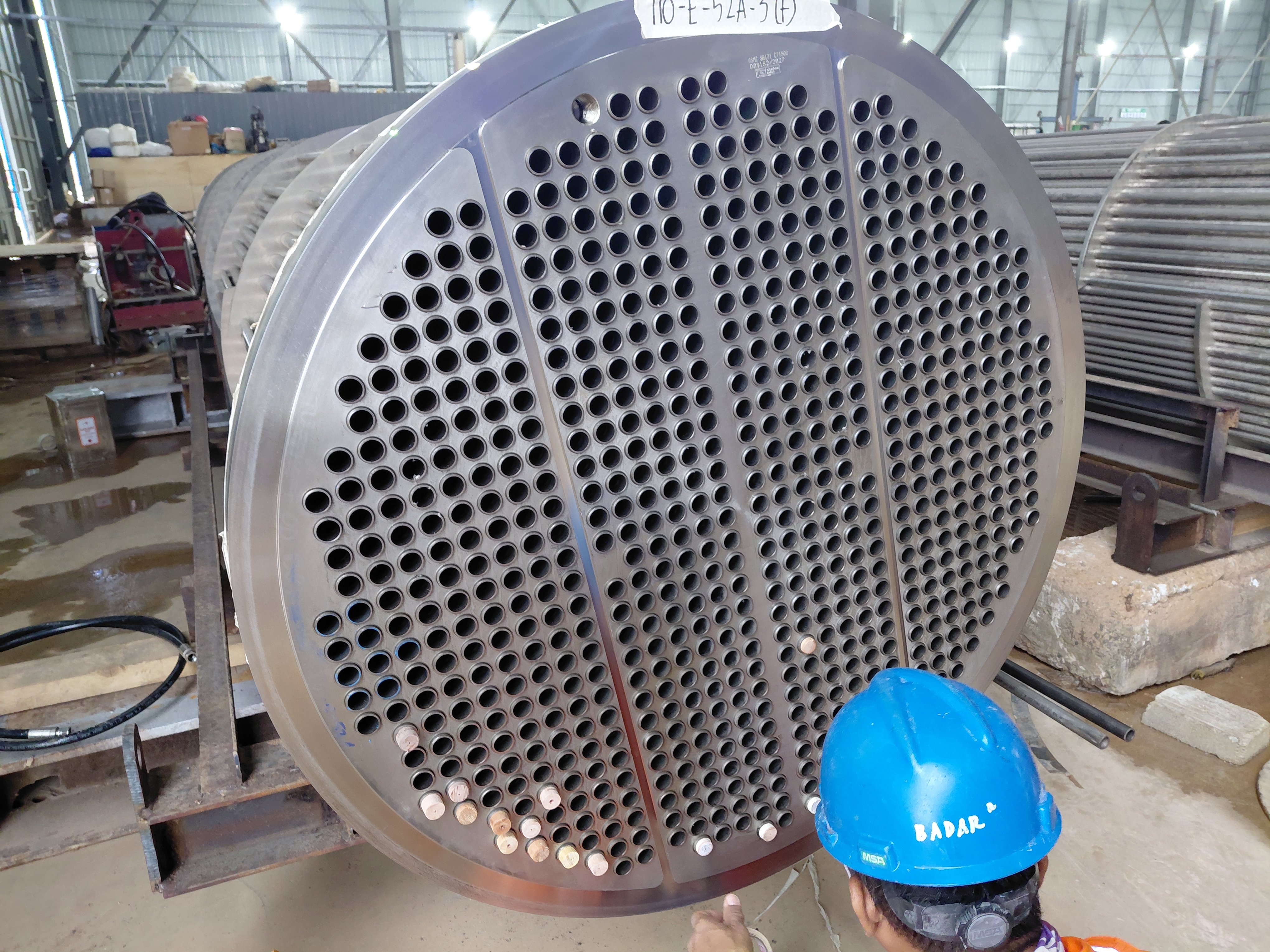
Corks and bungs were installed in the tubes on the tube sheet.
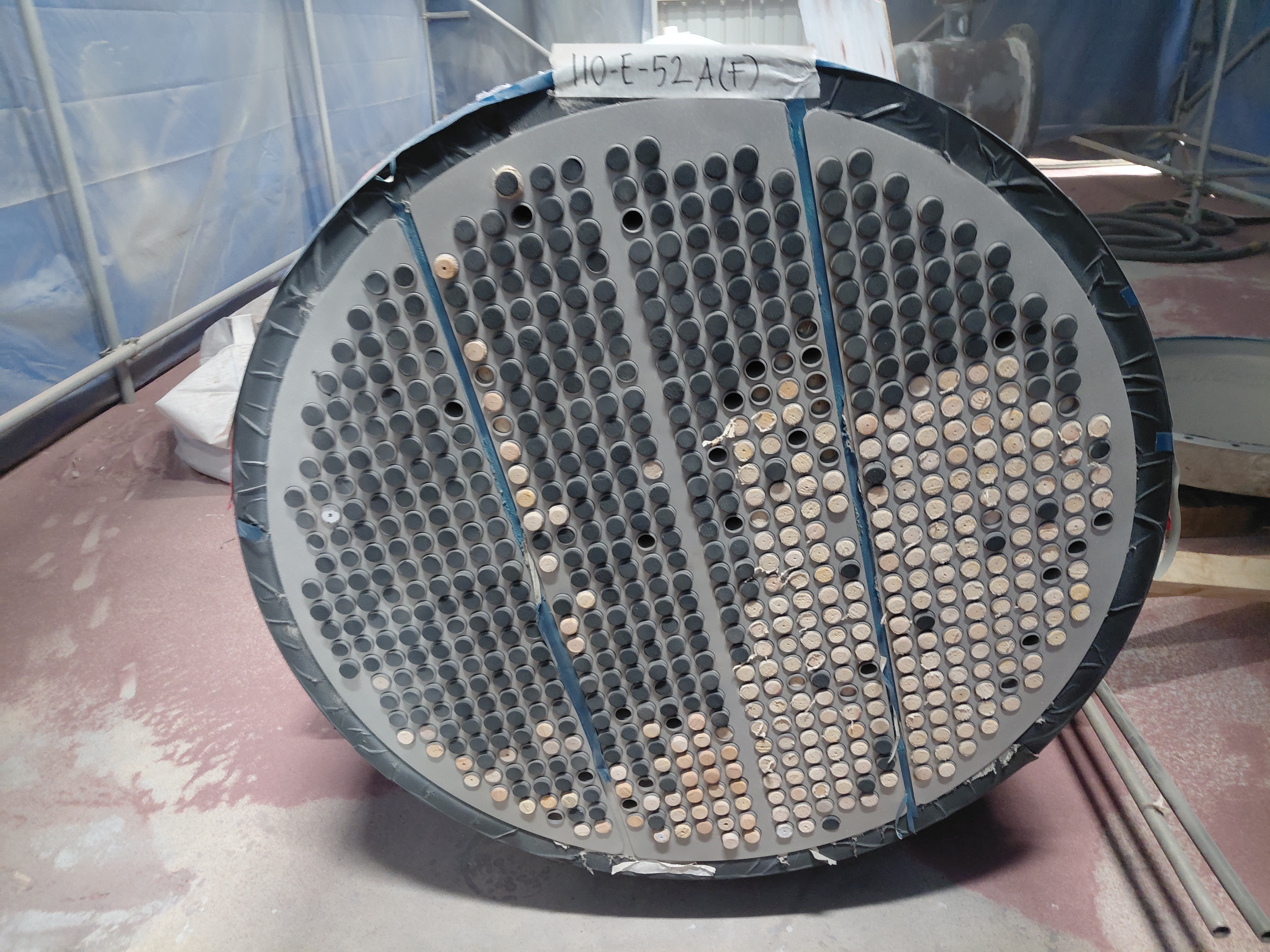
Tube sheet abrasively blasted to achieve the correct substrate profile
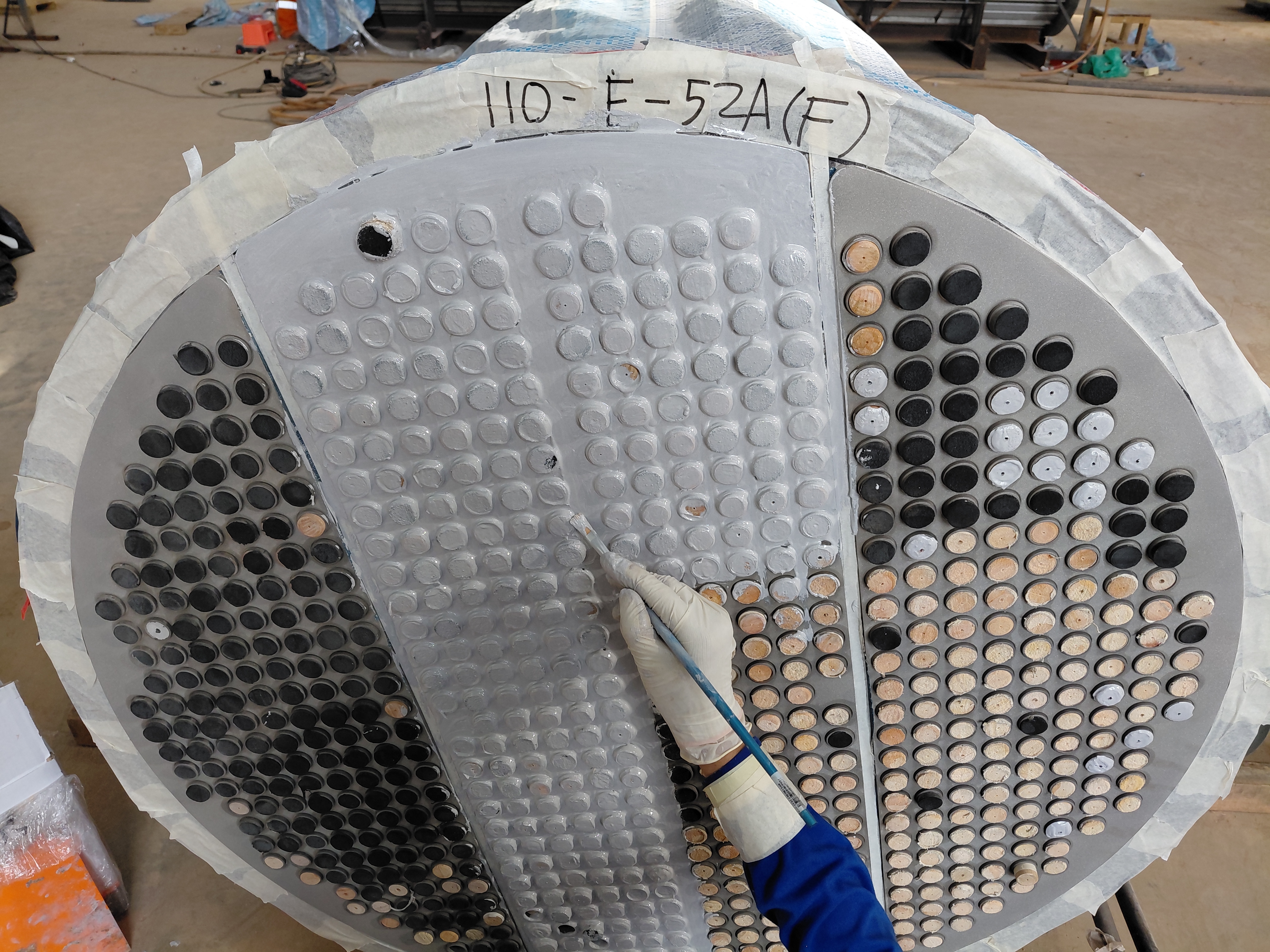
Application of 2 coats system of Belzona 1391T
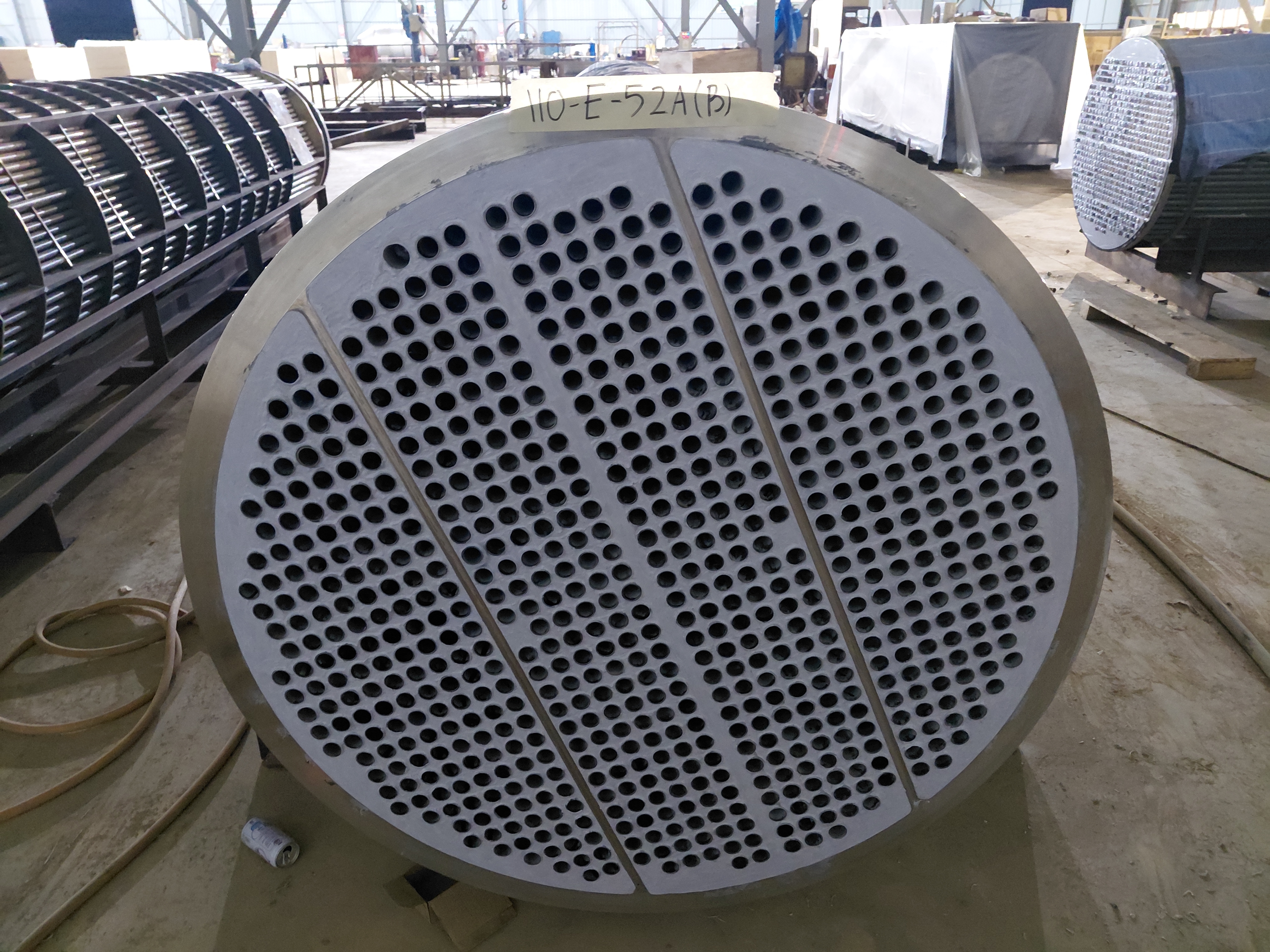
Completed Belzona 1391T coating application
Application Situation
The coating application was carried out at the manufacturer’s yard, where a total of 27 heat exchanger units were coated prior to installation. The project was successfully completed within 40 days, covering a total surface area of 97 sqm. This ensured the equipment received the required level of protection before entering service, helping to reduce the risk of early corrosion and erosion damage.
Application Method
Application was carried out in accordance with Belzona Know-How System Leaflets HEX-3. Prior to the application of Belzona 1391T, the surface was prepared by abrasive blasting to achieve a cleanliness of Sa 2½ whilst achieving a minimum average surface profile of 75 microns. Subsequently, the application of a 2-coat system of Belzona 1391T was carried out.
Belzona Facts
Belzona 1391T was chosen because it met the client’s coating specification, which required a system capable of providing long-term protection against both corrosion and erosion in aggressive service conditions. In addition, the material is designed to withstand operating temperatures of up to 130°C, making it suitable for the demanding thermal environment within the heat exchangers.