External Composite Wrap on Tank Roof Nozzles
Industry: Chemical & Petrochemical (PETR)
Application: TCC-Tanks and Chemical Containment Areas (TCC)
Substrate: Stainless-steel
Customer Location: Greater Houston, TX
Application Date: September 2025
Products: Belzona 4181 (AHR Magma-Quartz),Belzona 5721,Belzona 9611 (ES-Metal)
Problem: Customer had two nozzles on the roof of a stainless steel tank that were leaking vapors through the weld. This imposed a major safety issue with the chemical vapors leaking into the air, along with downtime costs to get this tank back in operation as soon as possible.
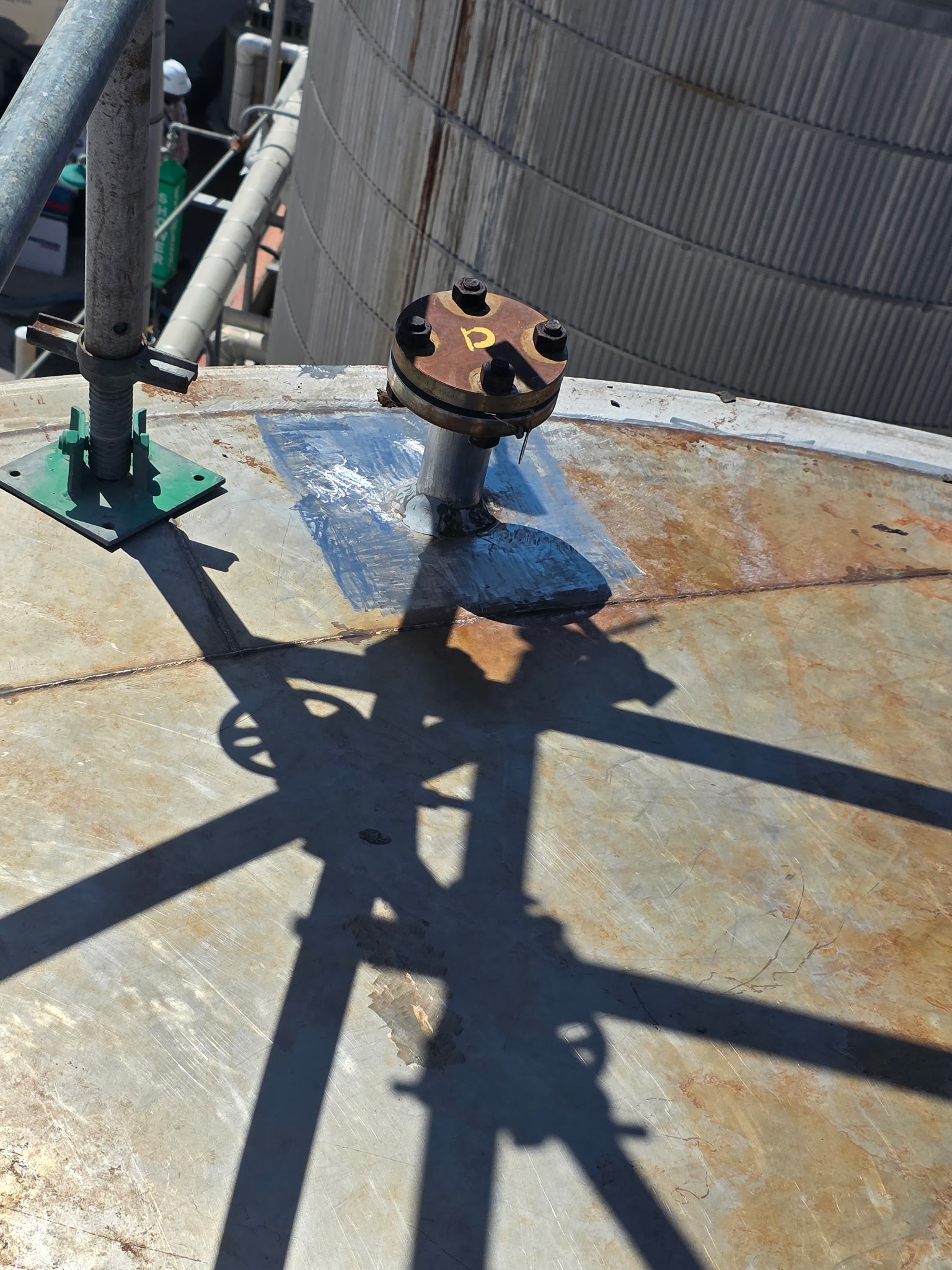
Belzona 9611 applied to seal the vapors, and a sparkless grinder used for surface prep (SSPC-SP11)
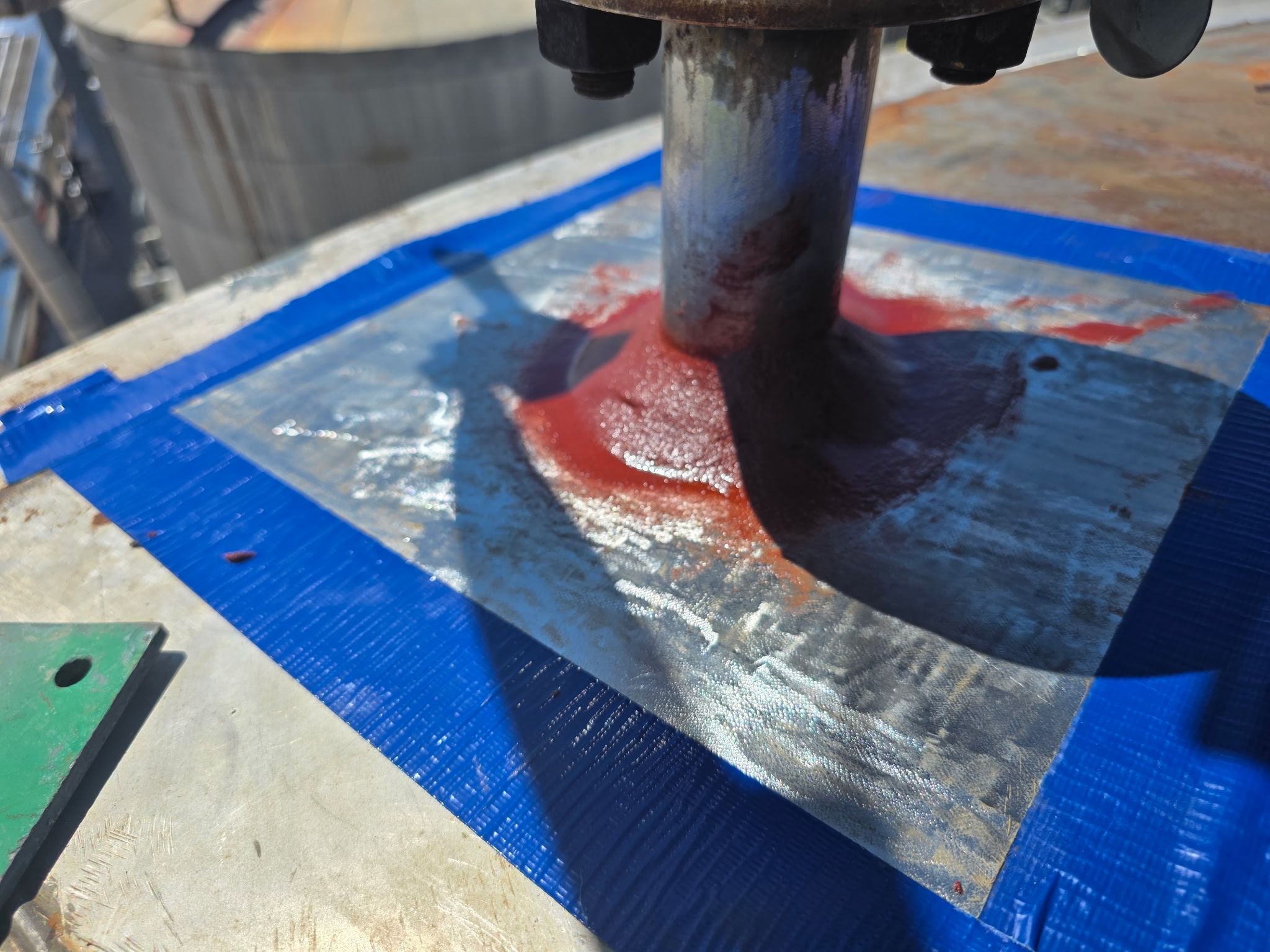
Belzona 4181 mortar applied around the neck to create a smooth chamfer for the composite wrap
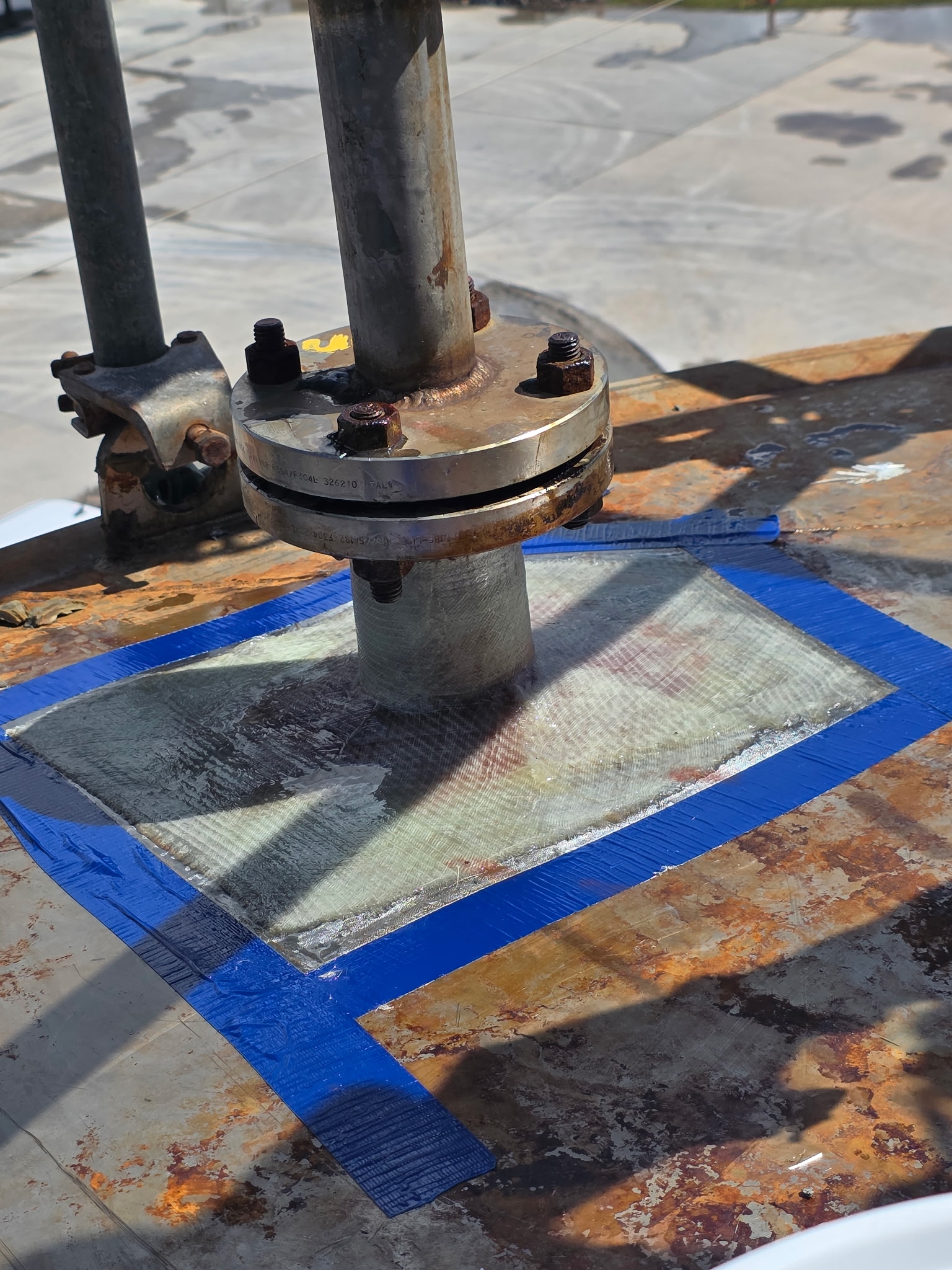
Belzona 4181 resin wet out into Belzona 9371 fiberglass reinforcement mesh to composite wrap the nozzle
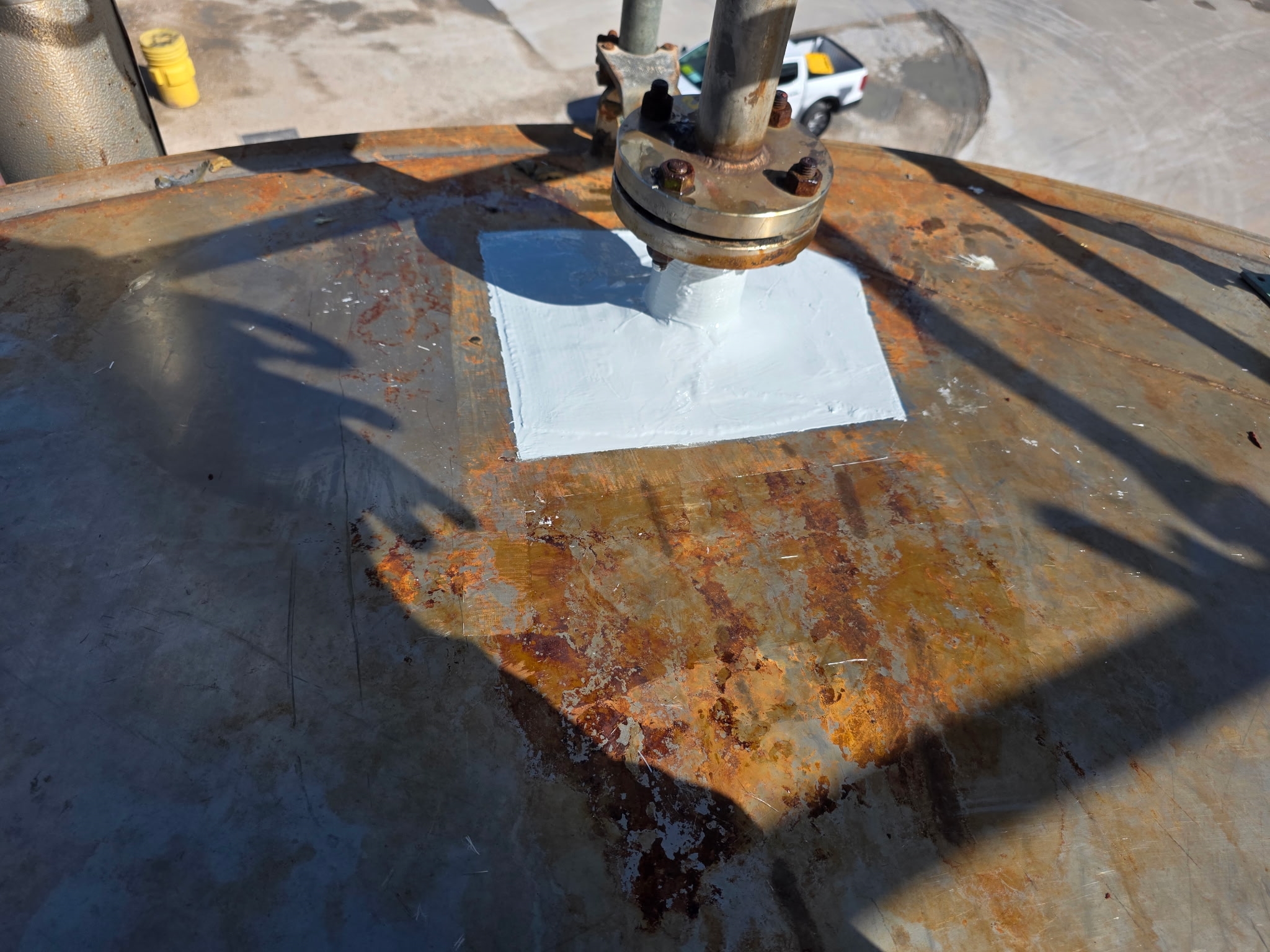
Final image with Belzona 5721 top coat applied
Application Situation
To weld repair the two nozzles with defects, it created many issues. The asset contained ethylenediamine, which is flammable, and would require the tank to be emptied, drained, and cleaned before welding could be done. The Belzona repair was done without needing to drain the tank, no hot work concerns, and sealed the hole stopping any vapors from emitting into the air. This eliminated safety risks from leaking vapors, and saved money on downtime costs.
Application Method
1. Belzona 9611 was applied to plug the defect
2. Sparkless grinders were used to create an anchor profile (SSPC-SP11)
3. Belzona 4181 mortar was applied around the weld seam to create a chamfer / smooth transition for the composite wrap.
4. Belzona 4181 resin and 9371 fiberglass were used to composite wrap the nozzle, 2 wrap/4 layer system extending 8" each direction from defect.
5. Belzona 5721 was applied as the UV resistance top coating.
Belzona Facts
The customer chose Belzona for cost, safety, and downtime savings. The work was done in one 10 hour shift with two men. The product cured quickly and allowed them to return to service as scheduled. Saving them catastrophic safety concerns and downtime costs.