In-situ Sealing of SF6 Gas Leak on GIS Equipment Using Belzona SF6-Fix System
Industry: Power (POWR)
Application: GSS-Gaskets, Seals and Shims (GSS)
Substrate: Carbon steel
Customer Location: Saudi Arabia
Application Date: February 2026
Products: Belzona 1983 (SuperWrap II),Belzona SuperWrap,Belzona 5721,Belzona 7311,Accessories
Problem: A severe SF6 leak across multiple GIS flanges caused a continuous pressure drop, forcing a unit outage and incurring financial penalties. Repeated gas replenishment failed to maintain pressure, confirming a widespread sealing failure that prevented the unit from returning to stable operation.
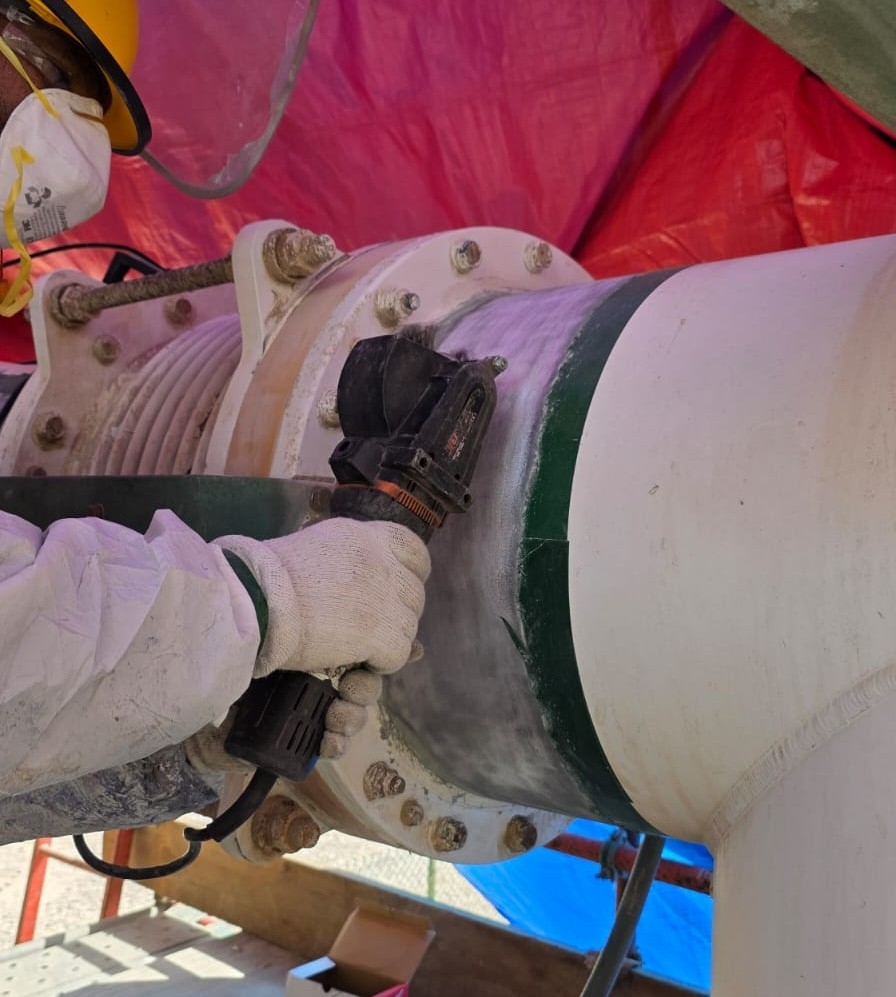
Surface preparation of bond areas in accordance to SSPC-SP 11 using MBX Bristle Blaster.
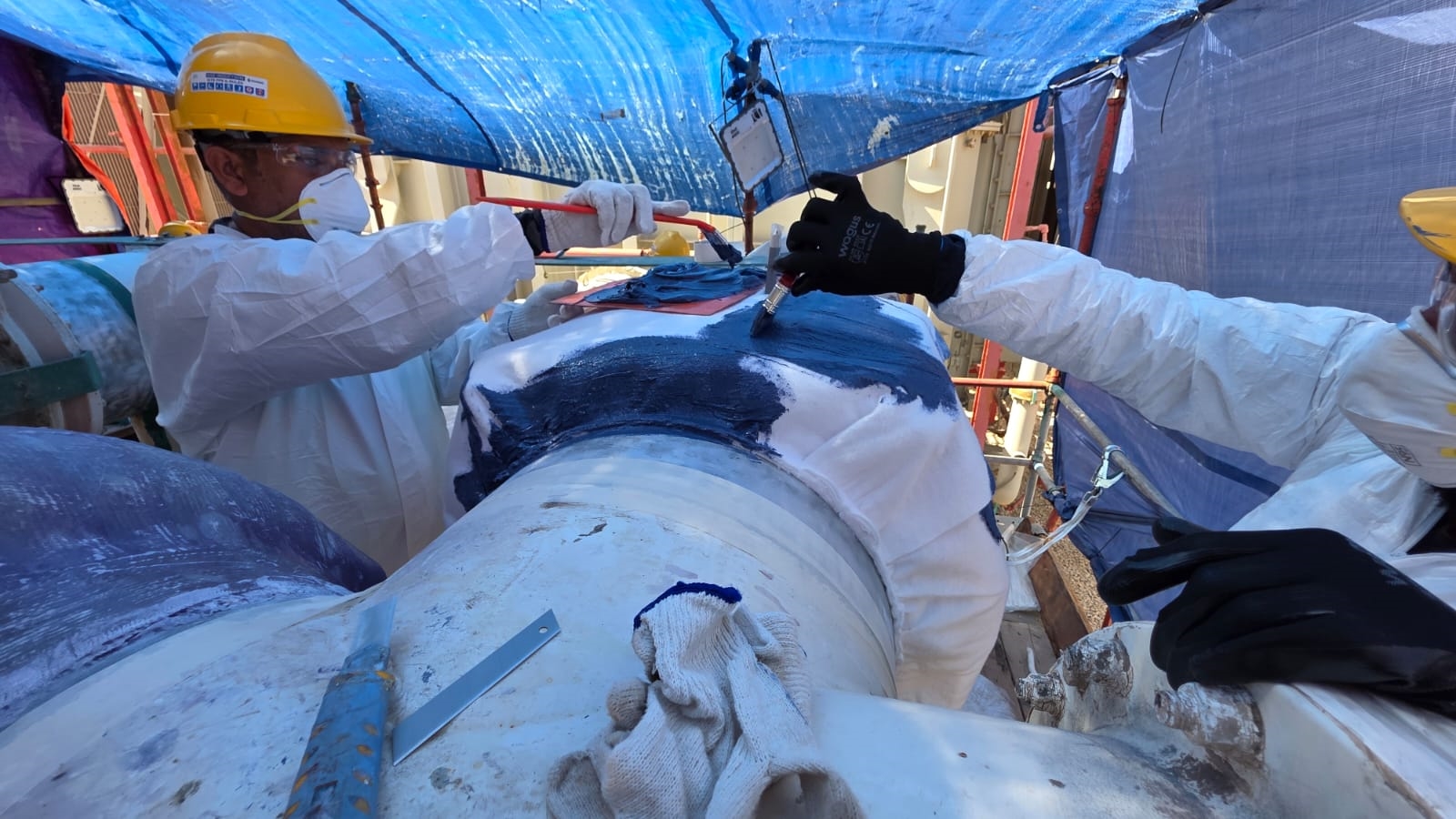
Application of Belzona 7311 on breather membrane.
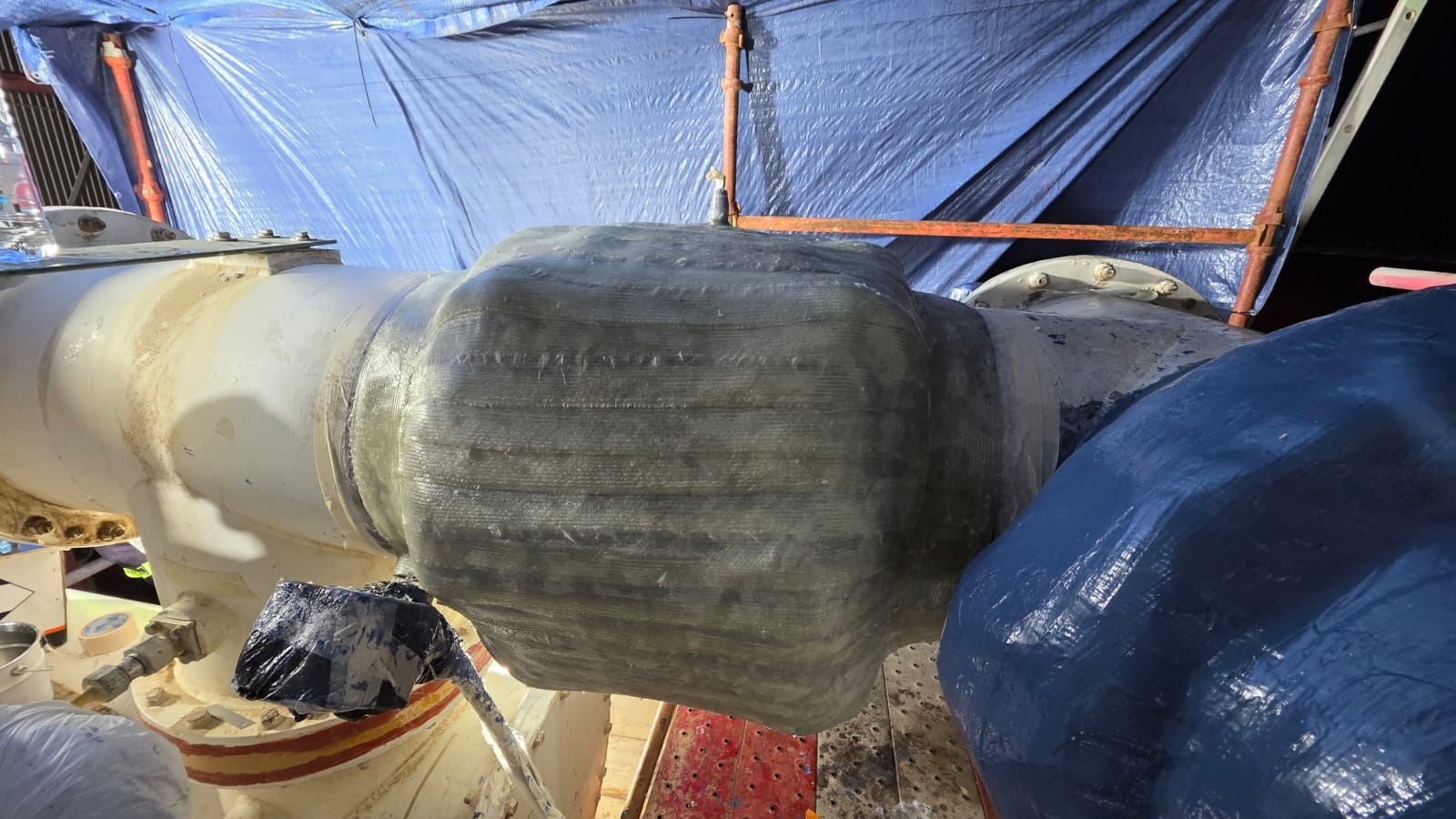
Application of Belzona 9371 reinforcement sheets wet out with Belzona 1983 SuperWrap II resin.
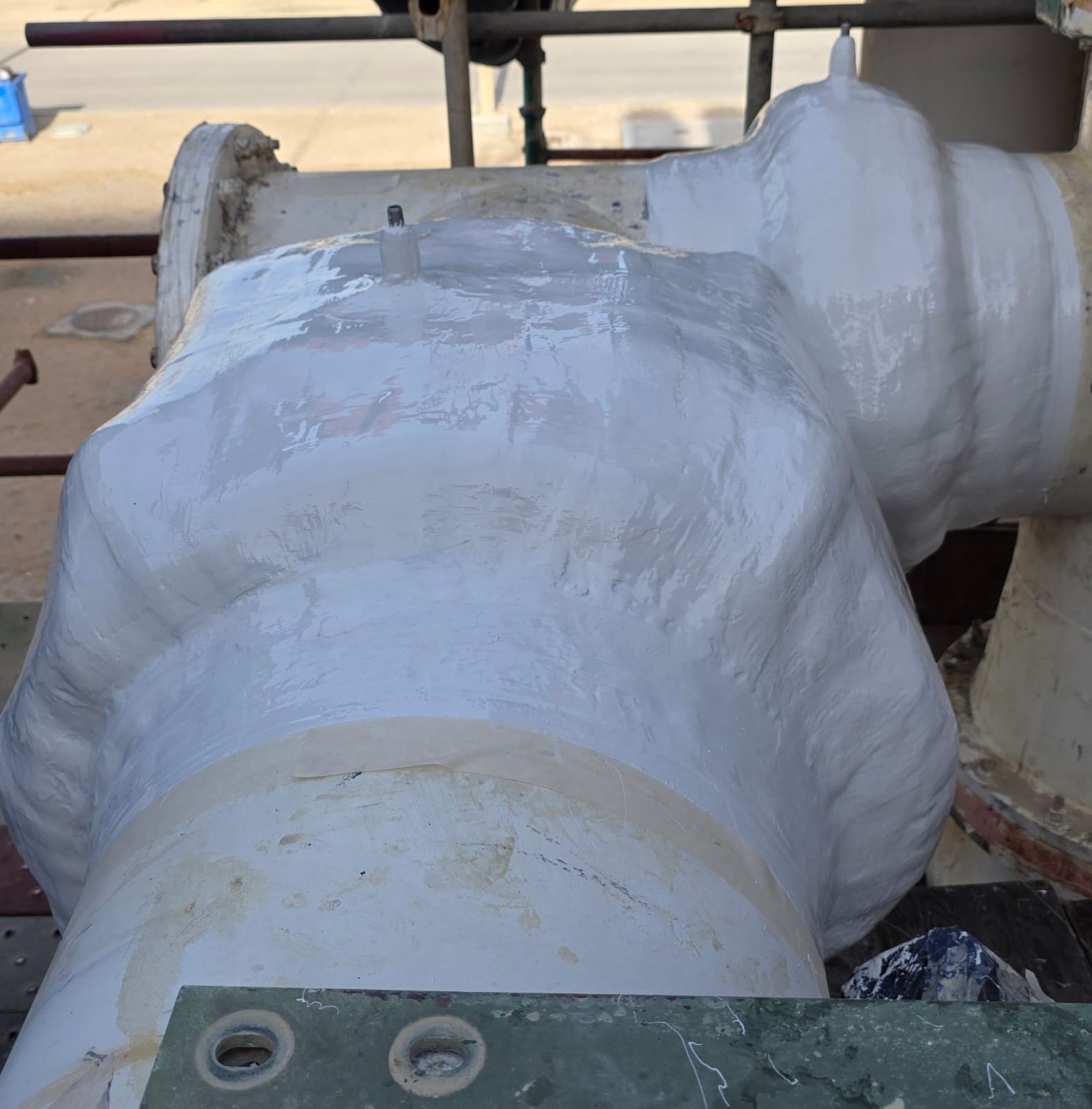
Application of Belzona 5721 UV-resistant topcoat.
Application Situation
The unit faced critical service conditions where prolonged downtime meant escalating financial penalties. Conventional repair would require a full shutdown, gas recovery, and dismantling of multiple flanges, causing significant delays. A rapid in-situ solution was essential to minimize downtime and restore operation without extensive disassembly.
Application Method
The repair followed Belzona SF6-Fix system leaflet GSS-14. Bond areas were prepared to SSPC-SP 11 standard using an MBX bristle blaster and cleaned of contaminants. Breathing tubes were installed on each repair using 3D-printed holders, with backing rod placed between bolt gaps to create a level surface.
A polypropylene geotextile breather membrane encapsulated each flange, anchored around the breathing tube. Belzona 7311 was applied to the membrane and bond areas, followed by pre-cut Belzona 9341 reinforcement sheets wet out with 7311 (50% overlap). Additional 9341 strips were applied circumferentially around the flange and bond edges.
Five layers of Belzona 9371 reinforcement sheets, saturated with Belzona 1983 SuperWrap II resin, were applied with 50% overlap, smoothed to remove air bubbles. Pre-cut 9371 sheets wrapped the flange ends and breather tube. A final 7311 layer fully encapsulated the wrap, finished with UV-resistant Belzona 5721 topcoat for environmental protection.
Belzona Facts
Belzona SF6-Fix provided a rapid, in-situ repair for a leaking GIS unit, avoiding a forced outage costing $30,000/day. Unlike traditional methods requiring gas recovery and dismantling, this solution sealed leaks while the unit remained in service. Its ability to encapsulate leaks and cure rapidly under ambient conditions eliminated downtime, reduced labor costs, and restored safe operation much faster than conventional alternatives.