Worn shaft gets the Belzona former treatment
Industry: Heating, Ventilation & Air Conditioning (HVAC)
Application: MPT-Mechanical Power Transmission (MPT)
Substrate: Carbon steel
Customer Location: Newark
Application Date: July 2025
Products: Belzona 1111 (Super Metal),Belzona 9411 (Release Agent)
Problem: A misaligned bearing on a shaft caused excessive wear and damaged the shaft beyond normal working limits
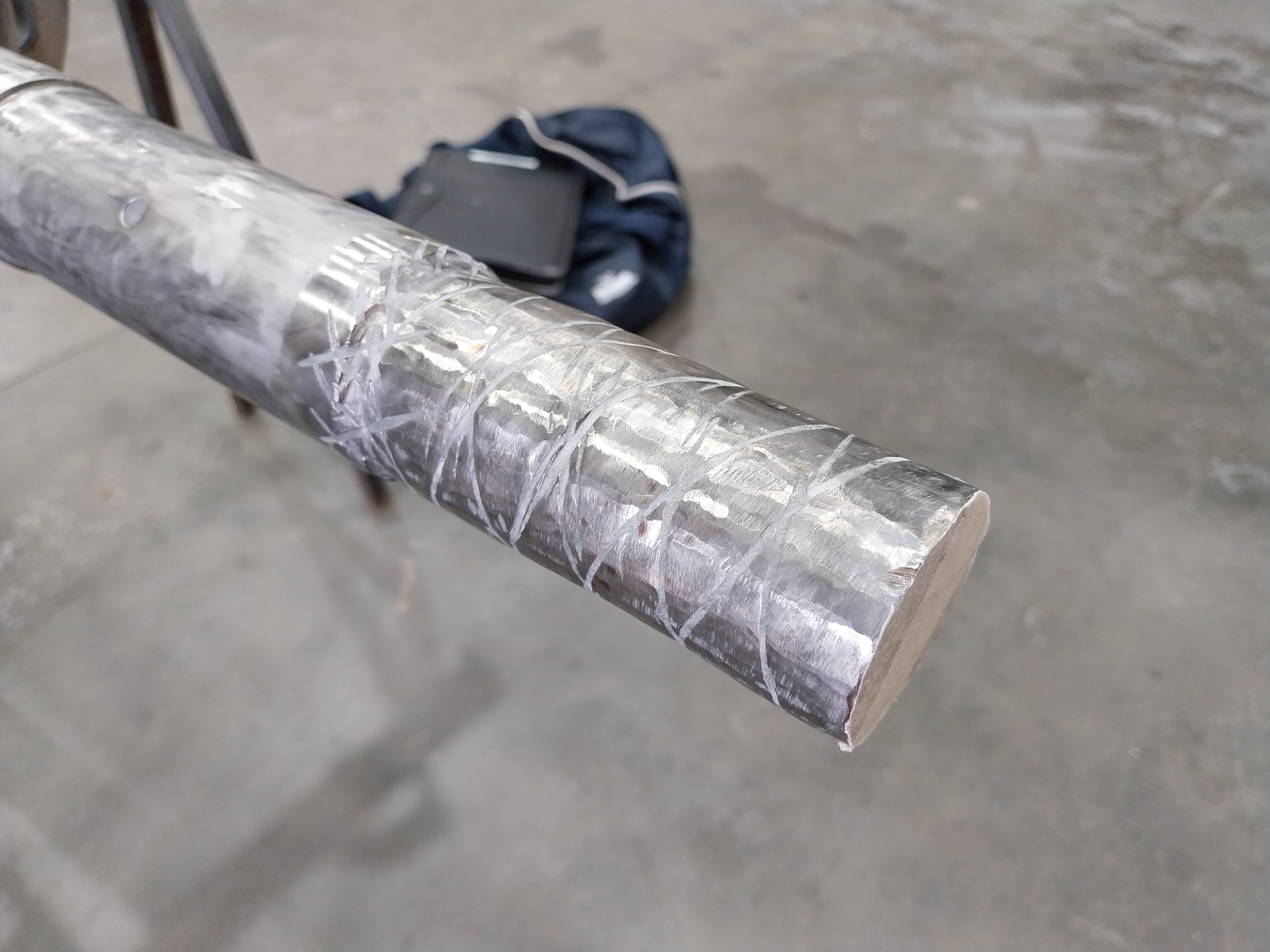
Damaged shaft, prepared using a grinder/cutting disc, then degreased and cleaned using Belzona 9111
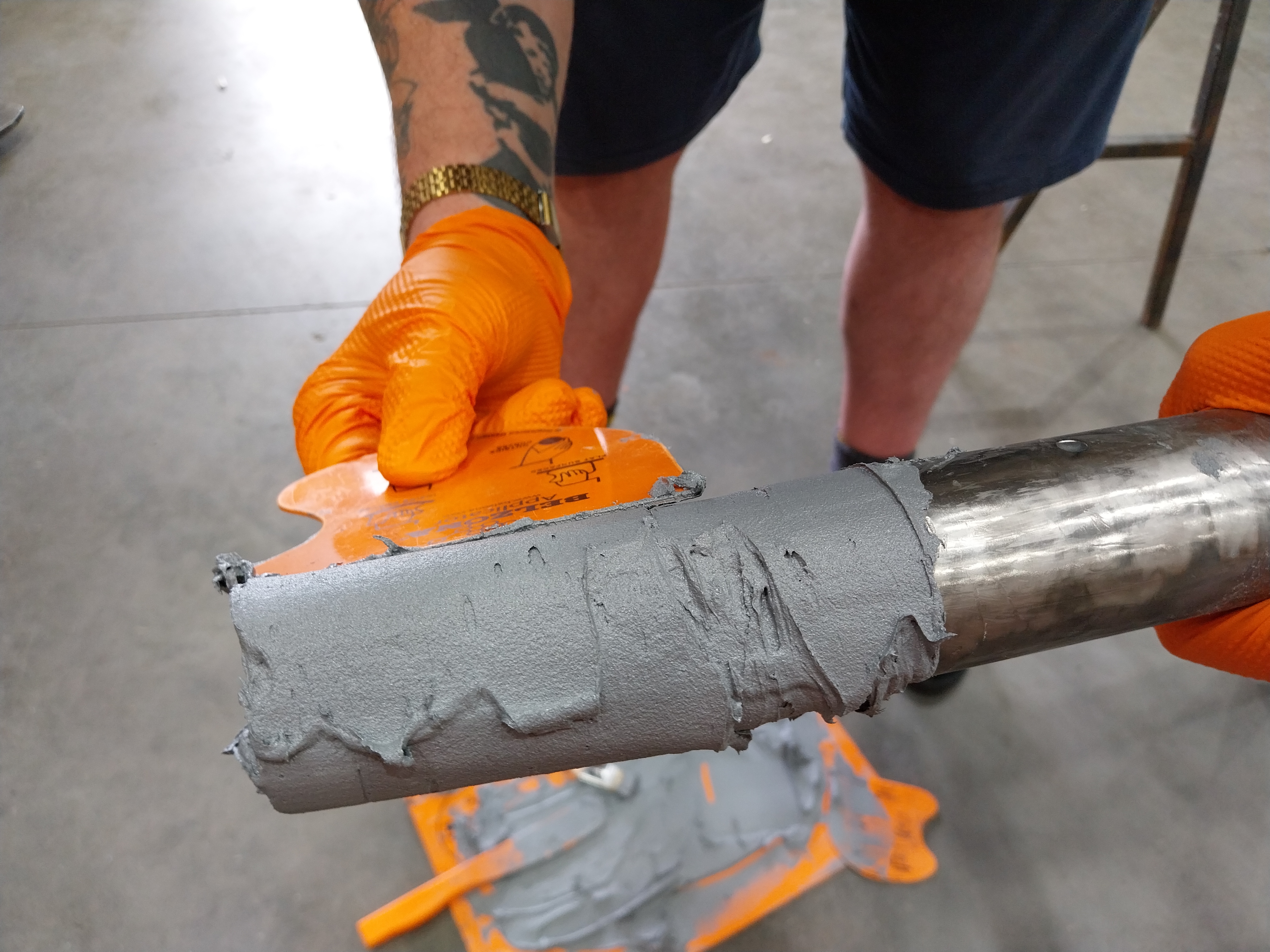
After wetting out the former and prepared shaft, the Belzona 1111 was applied using an applicator
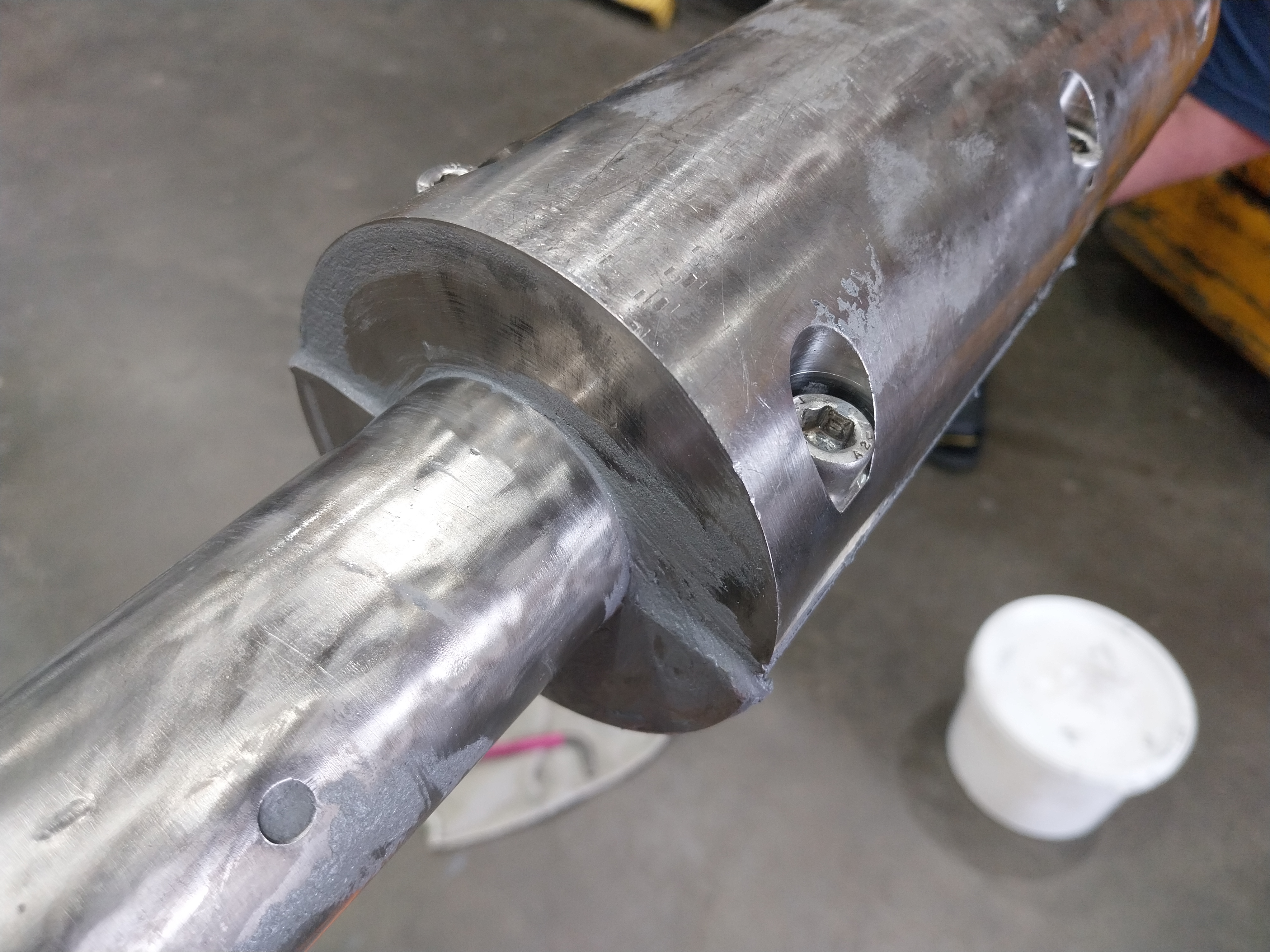
The former was put into place and the bolts tightened to extrude the excess Belzona and leave no air entrapment
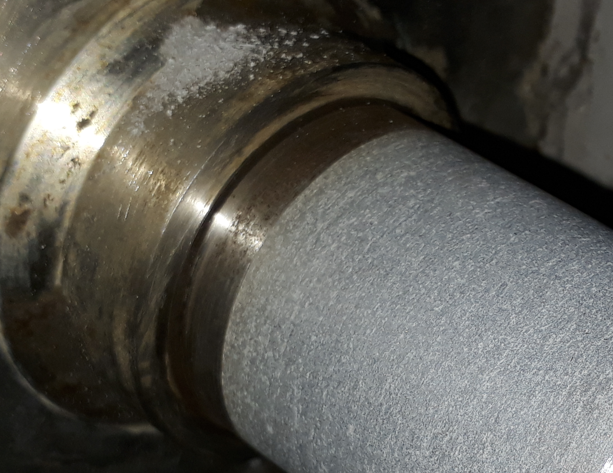
A rare opportunity to see the repair some months on, still showing perfect working geometry whilst now fitted into the machine
Application Situation
An existing client of Belzona suggested to this company that they had successfully used Belzona products and forming techniques on shafts. The company decided to try it out and the local Sales Engineer provided on-site training and support. The company are now confident in all future repairs to shafts and have asked Belzona to present to 10 of the major decision makers so they have options on future applications
Application Method
Shaft abraded with grinder/cutting disc
Belzona 9111 used to clean and degrease
Belzona 9411 release agent applied to former and parts of shaft adjacent to target area
Former and shaft "wetted" out with Belzona 1111 using a short bristled brush
Belzona 1111 applied to shaft using applicator
Former located onto the shaft and tightened
Allow for curing
Remove former and dress using fine emery paper
Belzona Facts
The only real alternative is Metal Spraying
Metal spraying produces fine metallic particles, fumes, and oxides during the high-temperature process.
It contributes to air pollution.
The fumes are toxic if inhaled, especially if metals like chromium, nickel, or zinc are used.
The particles settle on surrounding soil and water, contaminating ecosystems.
Thermal spray processes often require very high temperatures, especially plasma or HVOF (high-velocity oxy-fuel) spraying.
These methods:
Use large amounts of energy, often from fossil fuels.
Result in high carbon emissions depending on the power source.
Some spray materials (e.g., alloys containing beryllium, cadmium, or hexavalent chromium) are inherently hazardous
Metal spraying can pose health risks to workers and can leach into the environment.
Improper disposal of excess or used materials can cause soil and water contamination.
Overspray and unused coating material can end up as waste.
It often contains toxic or heavy metal residues.
Disposal needs to be carefully managed to avoid landfill pollution or illegal dumping.
Thermal spray equipment is very loud—often exceeding 100 dB.
Prolonged exposure contributes to noise pollution, affecting both workers and nearby wildlife.
Metal spraying is expensive.. around 4x - 10x that of a Belzona repair
Having been invited to return to see a refit of the repair the shaft is working well and ready for further bearing fits